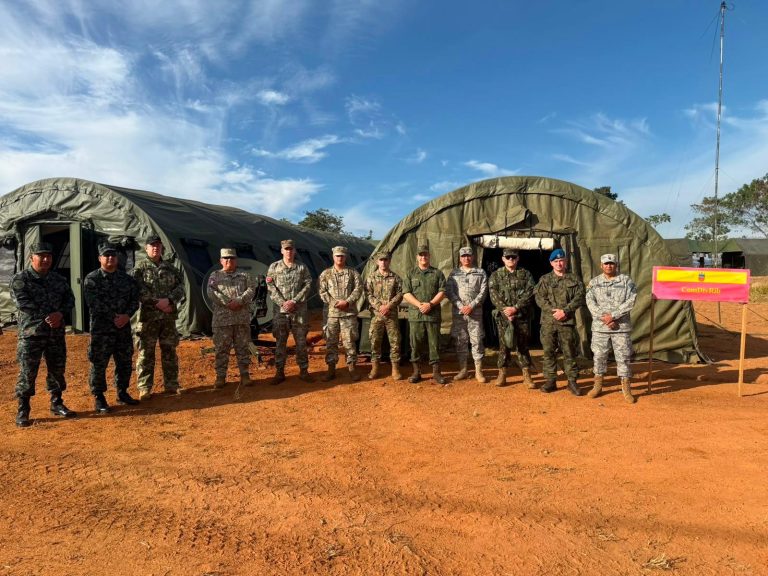
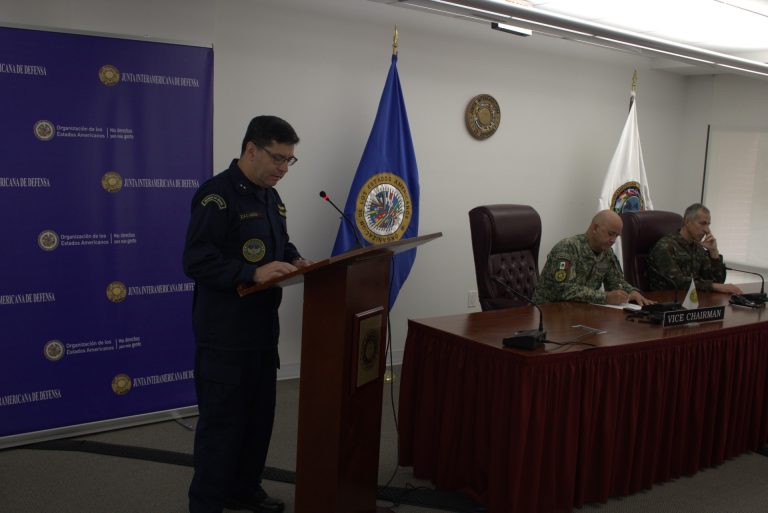
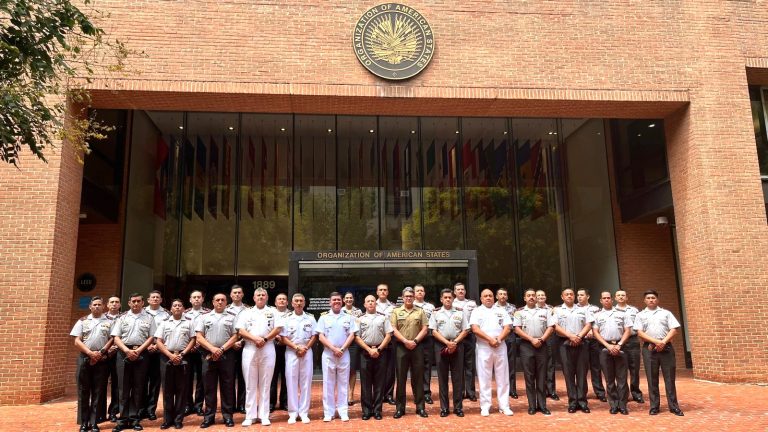
The Seminar on Migratory Flows in the Hemisphere was held on November 20 in a hybrid format, leaving in evidence conclusions and recommendations that are essential to move forward in the best way possible in the face of this irregular activity that has been increasing throughout the region, fulfilling the objective of analyzing and discussing the role of the armed forces in migratory flows in the inter-American system.

Major General DEM Marco Antonio Álvarez Reyes, President of the Council of Delegates, welcomed the participants to this important event and gave the floor to the Minister of Defense of the Republic of Peru, Major General EP (R) Walter Astudillo Chávez, who opened the event, contextualizing the Migratory Flows and highlighting the participation of our Armed Forces in this activity. Likewise, the Organization of American States, the Inter-American Defense College, the William J. Perry Center for Hemispheric Defense Studies, and the Network of Experts and Latin American Analysts (REAL) participated in the event, as well as the exchange of experiences from different countries in the region. Later, the Director General of the IADB Secretariat, Major-Brigadeiro Do Ar FAB Flávio Luíz De Olivera Pinto, closed the event and gave his conclusions, also thanking the 3,553 participants from 39 countries who followed this event in person and/or virtually.

The Seminar provided several conclusions, highlighting that the Armed Forces play a complex and multifaceted role in managing migration flows in the inter-American system, balancing security, international cooperation and humanitarian assistance, while facing challenges and criticisms about their role.

Migration flows in the inter-American system also present both opportunities and challenges. It is essential that countries adopt comprehensive and collaborative approaches to address these challenges and maximize the benefits of migration.

On the other hand, with respect to the Armed Forces, several important lessons learned were discussed through participation in the management of migratory flows in the inter-American system, as evidenced in Operation Acolhida in Brazil, and in other countries that presented their experiences, such as Honduras, Peru and the Dominican Republic, and transversal actions could be taken to benefit countries throughout the hemisphere. These lessons learned are valuable for improving the management of migratory flows in the inter-American system and ensuring a more humane and coordinated response.
Finally, you can watch our full event through our YouTube channel at the following link https://www.youtube.com/live/I-gvbYNTv8I?si=Lsgoap-kYishTWBG