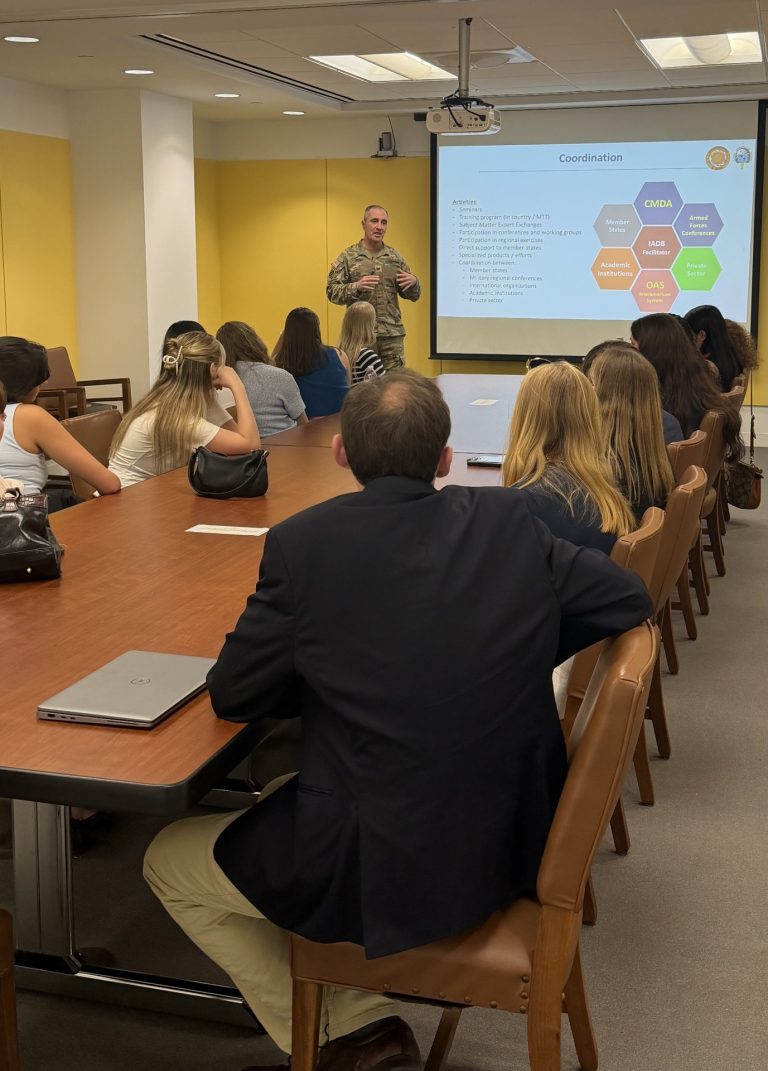
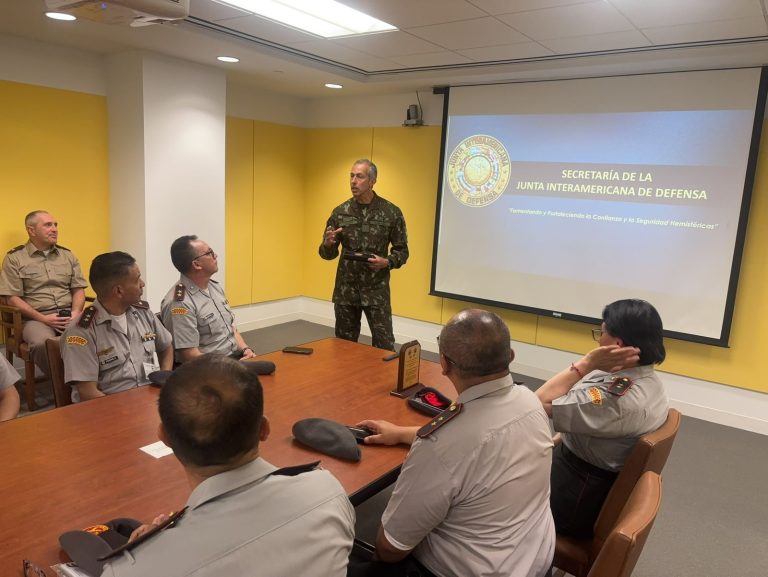
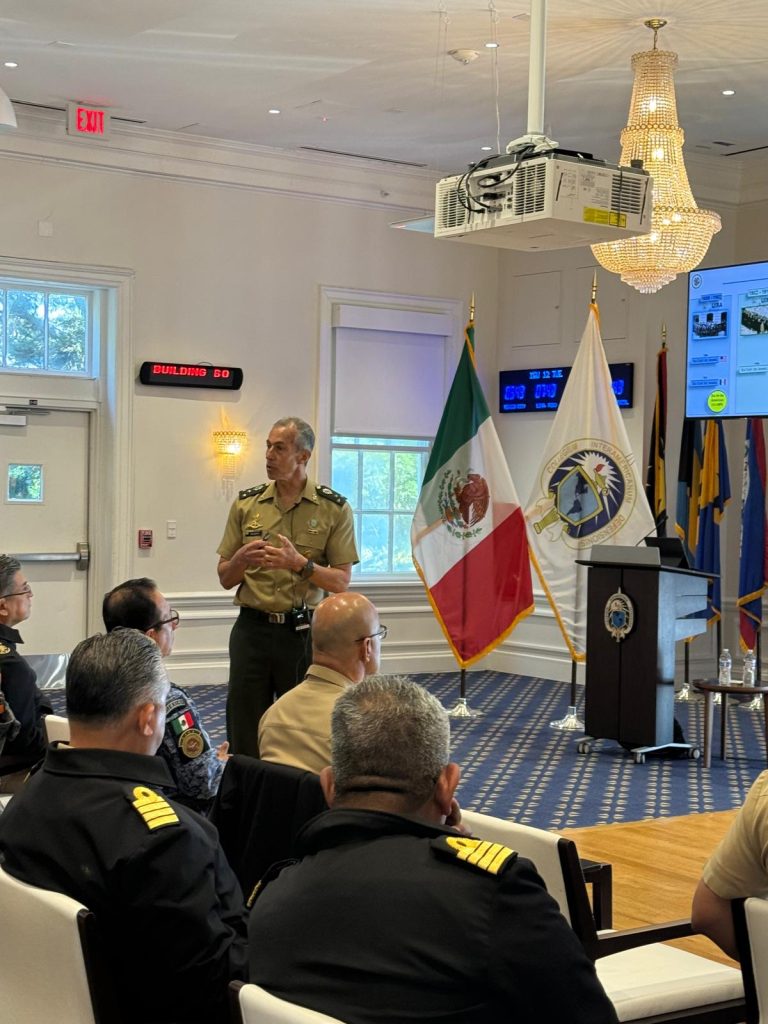
From November 1 to 3, the Third International Congress of Science and Technology for Humanitarian Demining took place in Bogotá. The Inter-American Defense Board (IADB) was represented by military personnel who make up the Group of Inter-American Monitors (GMI-CO) and the Group of Inter-American Technical Advisors (GATI-CO) in Colombia, missions in support of such activity.
The Congress was organized by the National Center against Improvised Explosive Devices and Mines (CENAM) of the Colombian Army and the EAN University. Among the speakers were the Head of the GMI-CO, Captain (Brazilian Marine) Leonel Mariano da Silva Júnior, who spoke about the IADB's 30 years of support for demining and its perspectives, and the Advisor of the GATI-CO, Lieutenant Captain (Brazilian Marine) Everton Givisiez Neri, who spoke about the training provided by the IADB in Colombia.
The activities of the Congress, opened by a conference by Doctor Mariany Monroy, Coordinator of the Comprehensive Action Program against Antipersonnel Mines of the Government of Colombia, provided relevant updates regarding the situation of humanitarian demining in the country, the types of improvised explosive devices currently used by armed groups, and aspects related to technological evolution, such as the use of disruptive technologies, canine training kit for detection – developed by the Colombian Military Industry, research in textile materials for Personal Protective Equipment, new technologies for artifact detectors explosives and use of augmented or virtual reality for personnel training.
The GMI-CO and the GATI-CO have represented the IADB in support of the efforts of the Colombian authorities to reduce the effects of antipersonnel mines and improvised devices, which have penalized the country's population for six decades. Currently, the Groups are made up of officers from the Brazilian Navy, Brazilian Army and Mexican Army.